Pengouin Coloring for Kids
A Designer’s First Glance: Playful, Not Precious
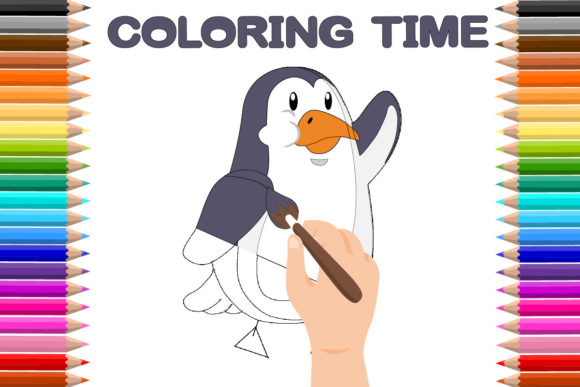
When I opened the Pengouin Coloring for Kids ZIP file—PNG on transparent background and JPG—I wasn’t looking for “cute.” I was looking for *stitchable*. And right away, the design delivers a relaxed, friendly penguin shape with clear outlines, open interior spaces, and gentle curves—not fussy, not overly detailed, but unmistakably joyful. It doesn’t scream “fine art” or “vintage illustration.” It feels like something a child might draw after watching a nature documentary: rounded belly, soft beak, simple feet, no tiny claws or complex feather layering. That’s a strength—not a limitation—for embroidery designers who need clean, confident lines that translate well into satin stitch or fill stitch.
Real Project Test: A Custom Embroidered Baby Towel Set
Last week, I prepped a small-batch order of organic cotton baby towels for a boutique client—each towel personalized with a single embroidered motif and the baby’s name. I chose Pengouin Coloring for Kids as the centerpiece. Why? Because it holds visual weight at 3.2" tall without crowding the fabric, reads clearly even at low stitch density, and avoids thin interior lines that vanish under thread. On the towel’s looped texture, the bold outer contour stayed crisp. The open belly area gave me room to add a subtle light-blue fill stitch—no dense buildup, no puckering. Parents loved it. One emailed saying, “It looks handmade, not printed”—exactly the impression we want from a handmade product.
Where It Shines (and Where It Needs Care)
Pengouin Coloring for Kids works beautifully for:
- Custom apparel: Clean silhouette reads well on sweatshirt embroidery, especially over fleece or French terry where detail can blur.
- Tote bag design: Scales up nicely to 4–5" without losing clarity—ideal for front-of-bag placement.
- Embroidered patch: Its solid outline and minimal internal breaks make it stable for sew-on or iron-on backing.
- Baby embroidery: No sharp points or intricate features—safe, soothing, and age-appropriate.
- Holiday embroidery: Add a knit hat or scarf in thread, and it becomes an instant winter gift—no redesign needed.
But be thoughtful with:
- Small hoop sizes (<4"): The beak and feet are distinct but narrow—test stitch-out before committing to 2.5".
- Stretchy fabric (like jersey): Use cutaway stabilizer + basting stitch; the shape’s symmetry helps, but stretch can distort the curve of the belly.
- Dark fabric: The PNG’s transparent background is helpful, but check contrast—light thread on charcoal may read softly unless you boost stitch density slightly in key areas.
- Curved surfaces (caps, beanies): Avoid placing it across the crown seam; center it on the front panel instead.
Design Assets That Build Trust—Not Just Traffic
As an Etsy seller and craft business owner, I’ve learned customers don’t buy coloring pages—they buy *possibility*. Pengouin Coloring for Kids lands in that sweet spot: it’s versatile enough for digital embroidery file use, printable mockup previews, or even hand-drawn transfer for beginners—but it doesn’t pretend to be something it’s not. It’s not an applique design with layered fabrics, nor a complex machine embroidery design with 12 color changes. That honesty builds trust. When buyers see your finished product—a linen pillow cover with this penguin stitched in ecru thread—they recognize craftsmanship, not clutter.
Practical Notes Every Embroidery Designer Should Run Through
Before stitching Pengouin Coloring for Kids into your next project, do these five things:
- Test on scrap fabric first—especially if using textured or dark material. See how the outline holds and whether interior spaces fill evenly.
- Check thread color contrast in natural light. A pale yellow thread on ivory linen reads warmer than on cream cotton poplin.
- Review stitch density in your embroidery software. If it’s too sparse, small curves may look broken; if too dense, it could overwhelm lightweight fabrics.
- Confirm hoop size compatibility. This isn’t a 1.5" logo—it’s meant for mid-size applications. Don’t force it into tight corners on aprons or caps.
- Verify licensing. Since it’s marketed for KDP and Coloring Pages Amp, confirm whether commercial embroidery rights are included—especially if selling finished products on Etsy or at craft fairs.
Why It Fits Quietly Into Your Creative Workflow
You won’t find flashy marketing claims here—and that’s why Pengouin Coloring for Kids earns space in my working library. It doesn’t demand attention. It supports it. It pairs naturally with monogrammed initials on a tea towel, anchors a nursery decor set beside minimalist clouds, or adds charm to a holiday sweater without competing with cables or ribbing. As a digital embroidery file, it’s light, adaptable, and free of unnecessary vectors or hidden layers. As a Graphics asset, it bridges print and stitch—useful for packaging labels, social media previews, or printable mockups that show real-world scale.
The Bottom Line for Makers and Small Shop Owners
If you’re curating design assets for a craft business—or stitching custom orders for clients—Pengouin Coloring for Kids isn’t a trend-chasing download. It’s a reliable, mood-lifting tool. It performs consistently across fabric types, scales predictably, and carries warmth without fragility. It won’t replace your signature monogram or heirloom floral, but it will round out your seasonal offerings, soften a modern aesthetic, and give parents, teachers, and gift-givers a reason to pause and smile. In embroidery—and in business—that kind of quiet resonance is worth more than any keyword.