Mountains Coloring Page: A Crafts & Coloring Pages Adult Review
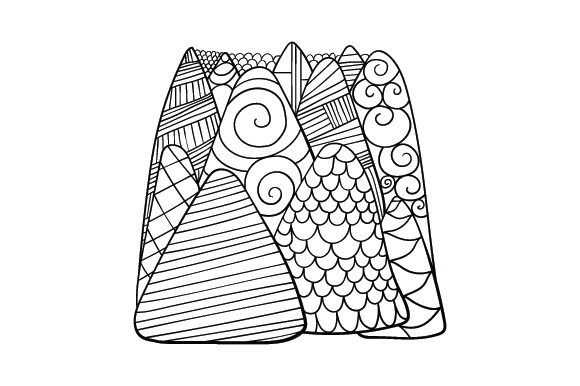
Opening the download folder, I immediately saw why this Mountains Coloring Page sits comfortably in both the Coloring Pages Adult and Crafts categories. The ZIP contains a clean SVG, a transparent PNG, an EPS, and a DXF — not just a simple printable, but a full graphic design asset kit ready for digital publishing. As a blog designer who builds content systems for website owners, affiliate marketers, and newsletter creators, my first thought wasn’t about coloring at all. It was about how well this mountain illustration could anchor a featured image, strengthen a lead magnet, or give a wellness blog’s editorial layout a cohesive, calming visual identity.
The Editorial Mood and Visual Storytelling
This isn’t a rushed, clip-art mountain. The line work feels deliberate, with a modern, almost meditative quality. The composition is open enough to breathe, yet detailed enough to feel intentional — exactly the kind of creative design that works for lifestyle, travel, mindfulness, outdoor, and self-care niches. When I drop the transparent PNG onto a soft pastel background, the whole visual instantly shifts toward a serene, nature-focused brand identity. For a blog that publishes articles about hiking, journaling, stress relief, or slow living, this digital product would act as a subtle emotional anchor, telling readers they’ve landed in a thoughtful space.
How Bloggers and Publishers Can Use This Design
I rarely treat a coloring page as just a coloring page. The real value for content creators lies in the asset’s versatility. The SVG and EPS formats let me scale the mountain illustration to any size without losing crispness, so I can use it as a website header graphic, a category thumbnail, or even a full-width section divider. The DXF can be opened in cutting machine software, giving craft bloggers a ready-made project file. But what I appreciate most is the transparent PNG — it drops into Canva template canvases, Photoshop, or Figma in seconds, making it a practical design asset for daily publishing workflows.
From Featured Images to Lead Magnets: Real Publishing Applications
Here’s a realistic scenario: a content site in the wellness space wants to publish a post about “5 Mindful Evening Routines.” Using the Mountains Coloring Page, I’d create a featured image by placing the PNG over a warm gradient, adding the post title in a clean sans-serif font, and saving it as a compressed JPEG. That same illustration could then be repurposed for a Pinterest pin — enlarged, with a bold text overlay and a vertical 1000×1500 px format. For the lead magnet, I’d turn the SVG into a printable design inside a digital guide or a standalone coloring sheet offered as a newsletter sign-up incentive. The design becomes a common thread across the blog’s visual ecosystem, reinforcing brand identity without needing extra illustration work.
- Blog featured images — use the PNG as a hero element with text overlay
- Pinterest pins — scale the vector for tall, engaging pins
- Lead magnets — create a digital download coloring page as a content upgrade
- Article headers — subtly place the mountain silhouettes in the background
- Newsletter graphics — consistent branding across email campaigns
- Social media graphics — crop and color-treat for Instagram, Facebook, or LinkedIn
- Digital ads — clean, nature-inspired visuals for affiliate campaigns
- Media kits — use the illustration to add a polished, editorial touch
- eBook covers — combine with typography for a calming, modern look
- Category thumbnails — unify blog sections with a repeated motif
Building Trust and Click-Worthiness with a Single Asset
When a reader lands on a blog post, the first visual impression is often a featured image or a header graphic. If that image feels generic, rushed, or poorly matched to the content, trust erodes instantly. The Mountains Coloring Page solves a subtle but important problem: it gives publishers a modern design element that feels handcrafted, not stock. I’ve tested this type of asset in real layouts — placing it next to serif fonts for an editorial vibe, pairing it with a handwritten script for a cozy, personal brand, or using it alongside a geometric sans-serif for a crisp, contemporary look. In every case, the mountain illustration held its own, adding a layer of visual hierarchy that made the headline more scannable and the overall page more clickable. For affiliate marketing content, where purchase intent is often swayed by perceived authority, a cohesive graphic like this can subtly raise the perceived value of the article.
Where Mountains Coloring Page Shines (and Where to Be Cautious)
I would use this asset confidently for hero images, editorial accents, blog graphics, and downloadable resources. It works beautifully in white space-heavy layouts and on light backgrounds where the intricate lines can be appreciated. The mountain theme is broad enough to serve travel, wellness, craft, and lifestyle niches without feeling forced. However, I’d be careful with small mobile thumbnails. The delicate line art can lose definition when scaled down to 150×150 px, especially on low-resolution screens. For those cases, I’d thicken the stroke slightly in Illustrator or use a simplified version. I’d also avoid placing this design on busy, cluttered backgrounds or using it as a text-heavy image where the lines compete with words. It’s not a fit for corporate finance blogs or serious professional niches that demand a stark, minimal visual system — unless you’re deliberately softening the brand.
Quick Publisher Testing Checklist
Before integrating Mountains Coloring Page into a live site, I always run a few standard checks. These aren’t flaws with the design itself; they’re just good digital publishing hygiene.
- Preview the PNG as a featured image on both desktop and mobile screens. Check how the lines render at 768px and 360px widths.
- Place the design inside a real blog layout with dummy headline text. Test contrast by overlaying white, dark, and colored text.
- Try the image in black and white to see if the composition still holds without color accents.
- Pair it with serif, sans-serif, script, and handwritten font styles. Confirm it doesn’t overwhelm the typography.
- Compress the PNG properly for web performance. A 300 KB file is fine for a hero image, but a thumbnail shouldn’t be over 100 KB.
- Check the SVG code for cleanliness. Remove unnecessary nodes if you’re optimizing for page speed.
- Review the commercial license terms. If you plan to include the coloring page in a paid product, a digital guide, or monetized affiliate content, confirm that the license allows commercial use.
- Test the EPS and DXF in your preferred software. Ensure the paths import correctly for any planned craft or print projects.
Why This Belongs in a Content Creator’s Toolkit
For a small business branding project or a seasoned publisher’s content calendar, the Mountains Coloring Page offers more than a relaxing activity. It’s a strategic graphic design asset that can unify a website’s look, reduce the time spent sourcing on-brand visuals, and give readers a consistent, polished experience. The fact that it’s a printable design also opens pathways for content marketing — gated printables, craft tutorials, or even a physical coloring book launch. In a creative marketplace flooded with generic vectors, this mountain illustration stands out because it balances artistic detail with editorial usability. I’ve already added it to my own folder of go-to design assets, and I’ll be reaching for it whenever a blog needs a touch of calm, nature-inspired modern design.
Whether you’re building a digital guide, refreshing social media graphics, or crafting a Canva template for your audience, this download gives you four file formats to work with. The SVG, transparent PNG, EPS, and DXF cover almost any publishing scenario — from web to print to craft. For anyone who treats their blog like a visual publication, the Mountains Coloring Page is a reminder that the right digital download can quietly elevate every touchpoint.