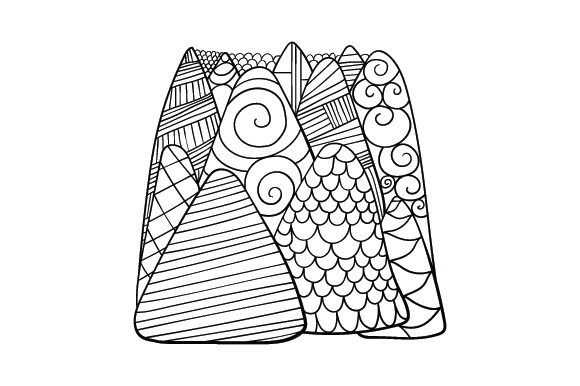
Retro Illustrations Coloring Page: Crafts & Designs Amp
First Impression: Nostalgia with Intentional Charm
Opening the Retro Illustrations Coloring Page, I immediately felt that warm, tactile pull of 70s and 80s design—curved lines, bold outlines, playful proportions, and just enough imperfection to feel human. This isn’t retro for retro’s sake. It’s a graphic design asset built with emotional resonance in mind: friendly but not childish, vintage but not dated, detailed but not overwhelming. For brand owners launching a new product line—or content creators building a seasonal Pinterest campaign—it sets an instant tone: approachable, creative, and authentically handmade. It leans into lifestyle, wellness, education, and small-batch product branding—not corporate tech or luxury finance.
A Real Campaign Test: Refreshing a Digital Product Launch
Last month, I helped a yoga coach relaunch her digital course bundle with a “Mindful Summer” theme. We needed visual cohesion across email headers, Instagram carousels, Canva templates, and printable journal pages. The Retro Illustrations Coloring Page became our anchor creative design: we used the SVG file to layer hand-drawn suns, retro sunglasses, and abstract botanicals over soft gradient backgrounds. Because it came with transparent PNG and EPS, we scaled it cleanly for website banners and printed it crisply on packaging inserts for physical workbooks. That flexibility—across printable design, web, and social—is where this asset shines as a commercial design.
Where It Strengthens Brand Identity—Without Overpowering
This isn’t a logo replacement—but it’s a powerful supporting player in brand identity systems. In packaging design, it adds warmth to minimalist labels. In social media graphics, it creates visual hierarchy by guiding the eye toward key messages (e.g., a retro camera illustration framing a headline like “Your First Photo Workshop”). On blog graphics or email banners, it builds audience trust through consistency—especially when repeated across touchpoints with the same color treatment. For small business branding, it signals creativity without sacrificing professionalism. And because it’s delivered as an SVG design and PNG design, it adapts seamlessly to both responsive web design and high-res print jobs like event flyers or merchandise stickers.
Marketing Visuals That Convert—Not Just Decorate
I’ve seen Retro Illustrations Coloring Page drive stronger engagement in three specific ways: first, as hero graphics for lead magnets—think “Free Retro-Style Coloring Kit” landing pages that stop scrollers mid-feed. Second, as decorative brand elements inside editorial design layouts (e.g., subtle corner accents in a media kit PDF). Third, as scalable assets in digital ads—especially Facebook and Pinterest, where nostalgic aesthetics outperform sterile modern design among audiences aged 28–45. It supports content marketing by making educational posts feel more inviting, and it elevates digital product visuals by adding texture and personality missing from flat stock icons.
Best Fit Use Cases
- Hero graphics for seasonal campaigns (e.g., “Retro Fall Recipe Bundle”)
- Branded templates in Canva for coaches, bloggers, and online sellers
- Packaging accents on subscription boxes or handmade product labels
- Content bundles—paired with editable text layers for instant customization
- Promotional banners for email newsletters or limited-time offers
- Decorative brand elements in digital workbooks, planners, and printable design kits
Use With Care—Strategic Boundaries Matter
Retro Illustrations Coloring Page doesn’t belong everywhere. Avoid it in formal corporate branding (think law firm websites or B2B SaaS dashboards), dense information layouts (like comparison tables or technical spec sheets), or low-contrast backgrounds where line clarity suffers. It can compete with the main message in text-heavy ads—so always test hierarchy. And while it works beautifully on mobile, avoid using fine-line details at under 120px width; preview on actual devices before finalizing. Also, skip it for brands rooted in ultra-minimalism or monochrome palettes unless you’re intentionally creating contrast.
Practical Brand Designer Notes You’ll Actually Use
Before dropping Retro Illustrations Coloring Page into your next project, do these five things: 1. Test it against your full brand color palette—not just primary hues, but neutrals and accent tones—to confirm harmony. 2. Check black-and-white usage: does the line weight hold up in grayscale? (It does—thanks to clean vector paths.) 3. Place it inside real campaign mockups: a Shopify product page, a Canva Instagram post, a printable PDF planner. 4. Preview on mobile screens—especially how it scales alongside body text and CTAs. 5. Confirm commercial licensing: Designs Amp grants broad usage rights, but always verify if redistribution or resale in a design bundle is permitted for your use case.
Typography Pairing & Visual Balance Tips
This asset breathes best beside humanist sans serifs (like Poppins or Inter) or relaxed serif fonts (such as Playfair Display). It clashes with overly rigid geometric type—but sings with gentle script fonts or expressive display fonts when used sparingly. Leave generous spacing around its outlines; overcrowding kills its charm. And remember: it’s a clipart-style illustration, not a photorealistic asset—so lean into its illustrative nature rather than forcing realism. When paired right, it becomes part of your visual language—not just decoration.
Why Creative Entrepreneurs Keep Returning to This Asset
In a crowded creative marketplace, Retro Illustrations Coloring Page stands out because it balances versatility with voice. It’s not generic clipart—it’s a curated, mood-driven design bundle that supports storytelling. Bloggers use it to add authenticity to DIY tutorials. Online coaches embed it into worksheets that feel personal, not transactional. Small business owners apply it to product labels that stand out on Etsy or local markets. And digital sellers build entire Canva template shops around its aesthetic. Whether you’re crafting a lead magnet, designing a sticker sheet, or refreshing your Instagram grid, this digital product delivers professional branding without demanding professional design time.