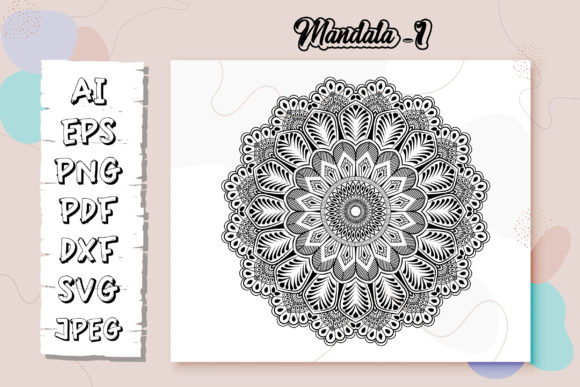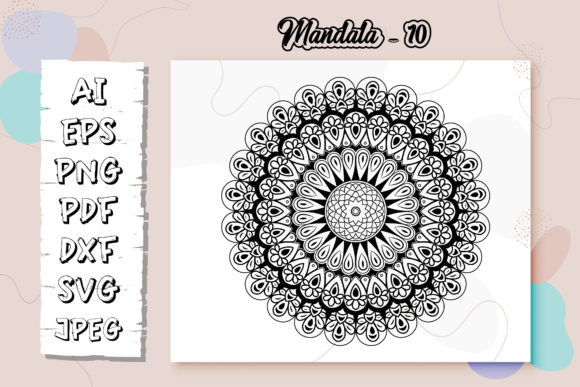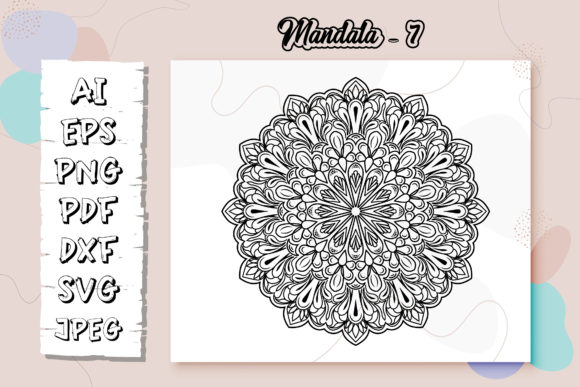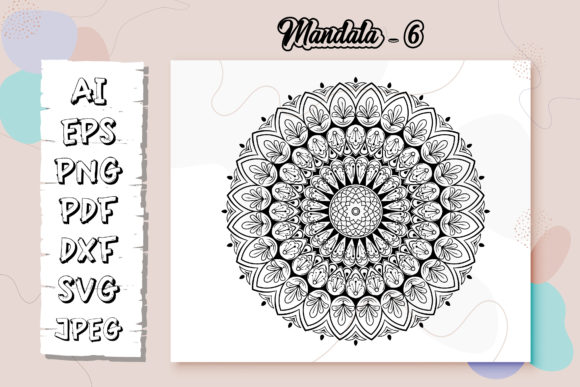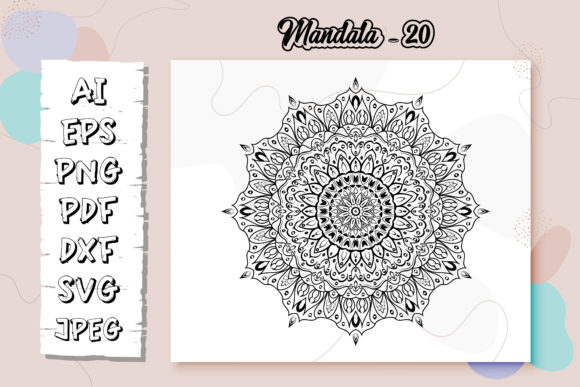
Mandala Coloring Book Page for Kdp - 20
As a designer who’s stitched over 300 custom embroidery projects—from boutique baby onesies to Etsy best-selling tote bags—I opened Mandala Coloring Book Page for Kdp - 20 expecting clean linework and balanced negative space. What I found was a quietly confident mandala: symmetrical without rigidity, detailed but not fussy, and built with the quiet versatility that makes a design work equally well as a coloring page and an embroidery foundation.
A Real-World Test: Embroidering This Mandala on a Linen-Cotton Tote Bag
Last week, I prepped Mandala Coloring Book Page for Kdp - 20 for a client’s small-batch linen-cotton tote line—handmade, minimalist, sold in local gift shops and on Etsy. I didn’t convert it directly; instead, I used the included SVG and PDF files to trace key contours into a simplified embroidery layout (no tiny inner petals—those would vanish in fill stitch on textured fabric). The result? A crisp, centered motif about 4.5 inches wide—substantial enough to read at arm’s length, delicate enough to feel intentional, not overwhelming.
Customers responded immediately. One buyer wrote, “It looks like it was drawn just for this bag—not slapped on.” That’s the mark of a strong base design: it doesn’t fight the product, it settles into it.
Where This Design Naturally Shines
- Embroidered patches and iron-ons: The bold outer ring and clear radial divisions translate beautifully into satin-stitched borders and smooth fill-stitch zones—no jagged edges or ambiguous gaps.
- Sweatshirt and baby onesie embroidery: Its moderate scale and open center mean you can place it on the chest or back without crowding seams or distorting stitch tension.
- Personalized gifts and holiday merchandise: Because it’s neutral—not floral, not seasonal, not gendered—it works across baby showers, teacher appreciation, wedding favors, and even mindfulness-themed wellness kits.
- Digital product sellers: As a Coloring Pages Amp asset, it’s print-ready at 8.5 × 11 inches with bleed—ideal for KDP interiors—but the vector files (AI, EPS, SVG) also let crafters resize cleanly for printable mockups or scaled-down embroidery digitizing.
- Small shop branding: When stitched subtly on aprons or tea towels, it reads as thoughtful detail—not decoration for decoration’s sake.
Where to Proceed With Intention
This isn’t a one-size-fits-all embroidery file—and that’s a strength, not a flaw. Here’s where attention matters:
- Hoop size & fabric texture: On highly textured fabrics like burlap or thick terry cloth, avoid scaling down below 3.75 inches—the finer inner lines may blur or skip during stitching. Always test on scrap first.
- Stretchy or thin fabrics: The design’s radial symmetry means it handles gentle stretch well—but pair it with cutaway stabilizer, especially for baby bodysuits or lightweight tees. Skip tear-away alone.
- Dark or layered garments: Since Mandala Coloring Book Page for Kdp - 20 is line-based (not shaded), contrast relies entirely on thread color. For navy sweatshirts or black totes, use bright white, metallic silver, or deep charcoal thread—not beige or pastel.
- Caps and curved surfaces: The outer ring holds up well on structured caps, but avoid placing the full motif near the bill seam. Center it on the front panel and reduce scale by 10–15% for cleaner wrap.
- Frequent-wash items: No dense fill areas mean less thread buildup—so pillow covers and kitchen towels hold up well after repeated laundering. Just confirm your digitizer uses appropriate underlay and reduced stitch density in open zones.
What This Design Says About Your Work—and Your Customers’ Experience
Using Mandala Coloring Book Page for Kdp - 20 signals care. It’s not chaotic. Not overly trendy. Not so simple it feels generic. That balance elevates how customers perceive your handmade product—whether it’s a $42 embroidered apron or a $14 digital coloring download. People notice when line weight is consistent, spacing is intentional, and rhythm feels calm rather than rushed.
For Etsy sellers and craft fair vendors, that translates directly to trust. A well-executed mandala says, “I paid attention to the details you won’t name—but will feel.” And for digital product sellers, having clean vector files (AI, EPS, SVG) means you can confidently offer commercial-use options—just verify licensing terms before bundling it into a craft bundle or selling as a standalone embroidery file.
Practical Designer Notes Before You Stitch or Sell
- Always run a test stitch on scrap fabric matching your final product’s weight and weave.
- Check thread color contrast in both natural and artificial light—especially for dark backgrounds.
- Review stitch density in the center motifs; if digitizing yourself, reduce fill stitch % by 5–10% in tight radial zones to prevent puckering.
- Confirm hoop size compatibility—this design scales well, but avoid pushing beyond 6.5 inches wide on standard 5×7 hoops without repositioning.
- Inspect small details in black-and-white mockups—what reads as elegant in color may disappear as gray-on-gray in thread.
- Compare performance on light vs. dark fabric using printable mockups—PNG and PDF files make this fast and accurate.
- Use appropriate stabilizer: cutaway for knits, tear-away + topping for textured weaves, no-show mesh for sheer fabrics.
- If selling finished embroidered goods commercially, double-check whether the original license permits derivative physical products—not just digital resale.
In short: Mandala Coloring Book Page for Kdp - 20 isn’t flashy—but it’s reliable, adaptable, and quietly sophisticated. It belongs in your folder of go-to Graphics assets not because it shouts, but because it listens—to your fabric, your machine, your customer, and the quiet intention behind every handmade product you make.