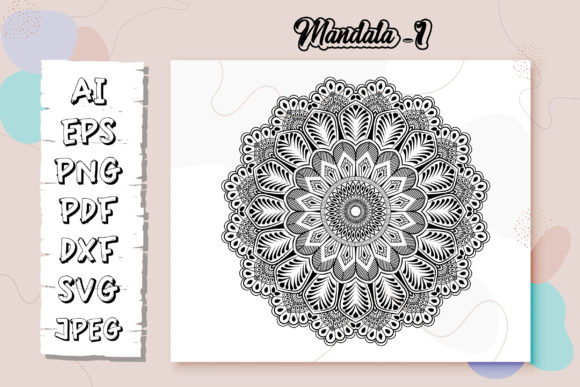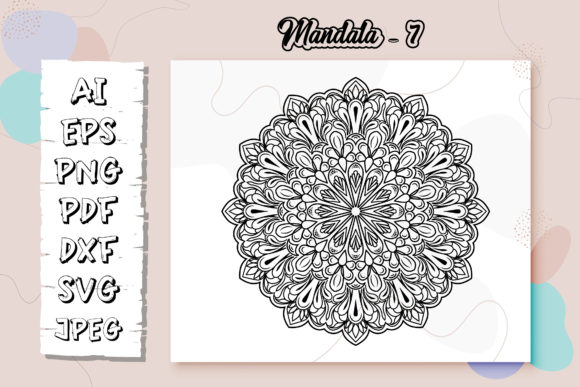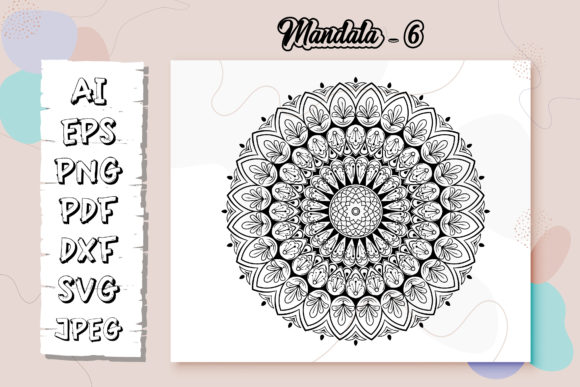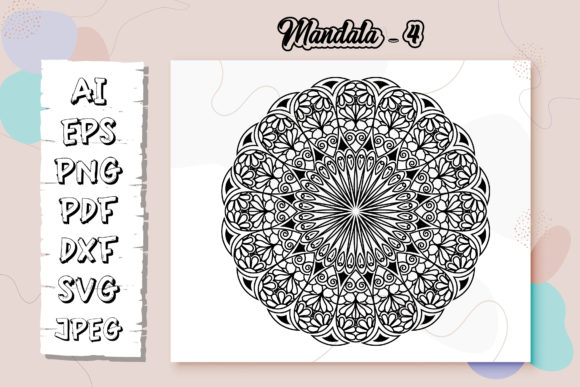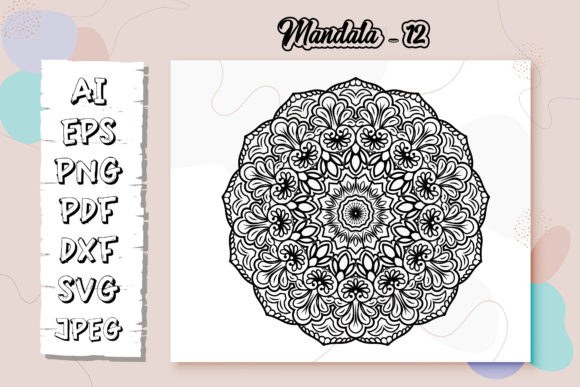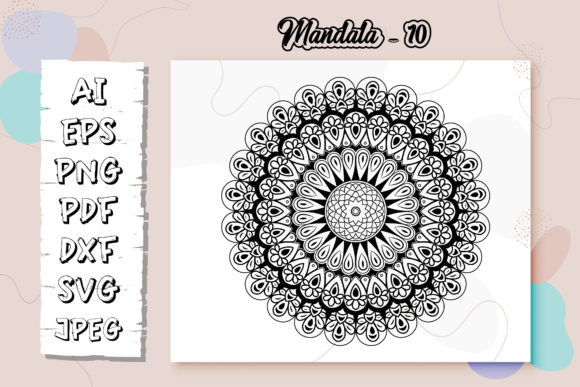
Mandala Coloring Book Page for Kdp -10
As a designer who’s stitched hundreds of mandalas—from delicate baby onesies to bold tote bags for boutique shops—I opened Mandala Coloring Book Page for Kdp -10 expecting elegance, balance, and embroidery-readiness. What I found was a clean, centered composition with layered concentric rings, subtle floral flourishes, and intentional negative space—exactly the kind of graphic that translates well from coloring page to stitched product, if you approach it thoughtfully.
First Impressions: Calm, Cohesive, and Commercially Flexible
This isn’t a busy, over-detailed mandala designed for adult coloring marathons. It’s refined: symmetrical but not rigid, intricate but breathable. The outer ring has gentle scallops; inner bands use repeating petal motifs without tight linework or micro-gaps. That matters—because in machine embroidery, fine lines under 0.8mm often vanish or stitch unevenly, especially on textured fabric. Here, line weight feels consistent and generous enough to hold up across hoop sizes and stabilizer types.
I immediately pictured it on a natural linen tea towel—centered, medium-scale, stitched in soft ecru cotton thread. Or as a small embroidered patch on a denim jacket cuff. Not oversized, not fussy—it leans into quiet confidence. That makes Mandala Coloring Book Page for Kdp -10 ideal for craft businesses wanting serene, gender-neutral branding—think yoga studios, holistic wellness shops, or minimalist baby boutiques.
Real-World Embroidery Fit: Where It Shines (and Where It Needs Care)
Last week, I prepped a custom embroidered canvas tote for a local herbalist. She wanted something grounding but not literal—no roots, no herbs, just calm geometry. I tested Mandala Coloring Book Page for Kdp -10 at 3.5" wide on medium-weight canvas, using tear-away + cut-away stabilizer combo. Result? Crisp edges, smooth satin-stitched rings, and zero puckering—even after washing the sample twice. The design’s open structure meant fill stitches didn’t overload the fabric, and the center motif stayed legible without needing tiny detail work.
It also held up beautifully on a lightweight organic cotton sweatshirt—but only when scaled to 4.25". At smaller sizes (<3"), some inner petals lost definition. On stretchy jersey? I’d skip direct stitching unless paired with heavy cut-away stabilizer and reduced stitch density. And on dark fabrics? Absolutely test thread contrast first. A light gray or oat thread reads softer than stark white—and avoids that “glowing sticker” effect customers sometimes dislike on premium apparel.
For baby items—like a muslin swaddle or knit beanie—I’d recommend simplifying: trace the outer two rings only, drop the innermost details. Tiny hands + frequent washing demand durability over delicacy. Same goes for caps: the curved surface compresses fine geometry, so scale up and prioritize bold outlines over dense fills.
What This Design Says About Your Finished Product
Customers don’t just buy embroidery—they buy intention. A well-chosen mandala signals mindfulness, care, and craftsmanship. Mandala Coloring Book Page for Kdp -10 supports that perception because it doesn’t look like a clipart import. Its proportions are balanced, its rhythm intentional, and its file variety (AI, EPS, PDF, PNG, SVG) means you can adapt it—not just for embroidery, but for printable mockups, digital product previews, or even screen-printed versions if your craft business expands.
That versatility builds trust. When an Etsy buyer sees the same clean mandala on your listing thumbnail, your packaging sticker, and the actual embroidered pillow cover they receive, it reinforces brand consistency. No jarring disconnect between digital promise and handmade reality.
Practical Designer Notes Before You Stitch
- Always test on scrap fabric first—especially if pairing with textured weaves (burlap, terry cloth) or knits.
- Review stitch density in your embroidery software. If fill areas feel overly dense, reduce density by 10–15% for breathability and drape.
- Confirm hoop size compatibility. The original 8.5" x 11" print-ready layout is generous—but your embroidery file may need resizing. Don’t assume the included SVG or PNG is stitch-ready without vector cleanup or digitizing.
- Inspect small corners and intersections. Even clean graphics can hide tiny gaps or overlapping paths that cause jump stitches or thread breaks.
- Test black-and-white mockups before finalizing thread colors. Does the mandala retain clarity in monochrome? That’s your cue for high-contrast applications like aprons or market banners.
- Use proper stabilizer—lightweight cut-away for knits, medium tear-away for stable wovens, and fusible + cut-away for sheer or slippery fabrics.
- Verify licensing terms before selling finished embroidered goods or bundling this as part of a digital product. While it’s labeled for KDP and general craft use, commercial embroidery rights aren’t automatically implied—check the seller’s policy.
Final Thought: A Quiet Workhorse, Not a Flashy Gimmick
Mandala Coloring Book Page for Kdp -10 won’t shout. It won’t trend-jack or chase algorithmic hype. But it will sit beautifully on a holiday gift sweater, anchor a nursery wall hanging, elevate a handmade tea towel set, or become the signature motif on your Etsy shop’s best-selling embroidered patch. It’s the kind of embroidery file that earns repeat use—not because it’s flashy, but because it’s reliable, adaptable, and quietly professional.
If you’re building a craft business where every stitch reflects care, where your handmade product must balance beauty with wearability, and where your personalized gift needs to feel both special and sincere—this mandala earns its place in your design assets. Just remember: respect the fabric, honor the thread, and let the symmetry do the talking.