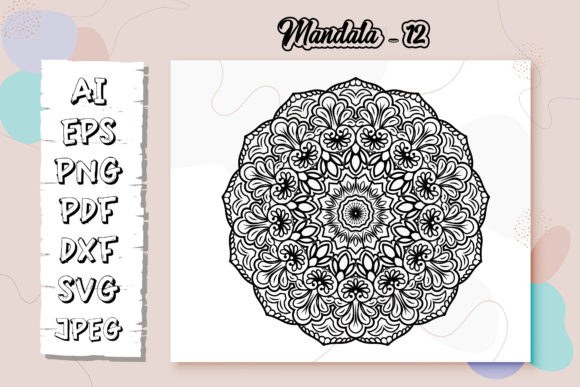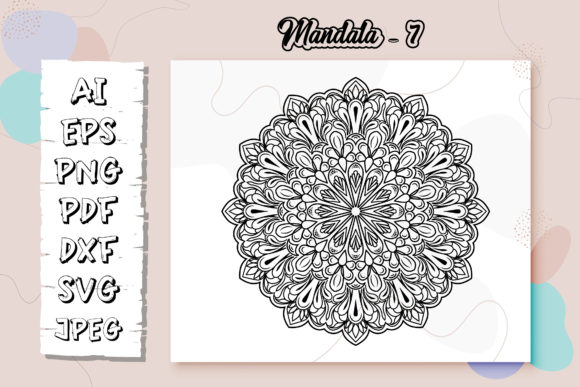
Mandala Coloring Book Page for Kdp - 7
A Designer’s First Glance: Calm, Centered, and Craft-Ready
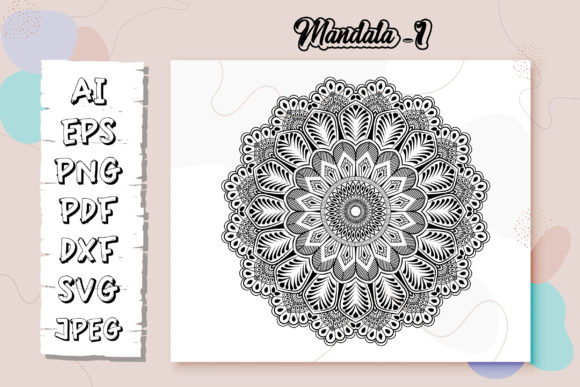
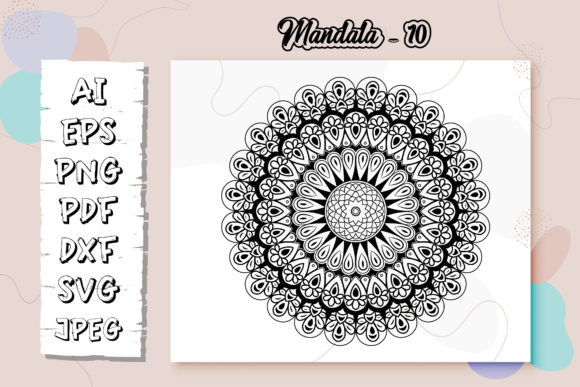
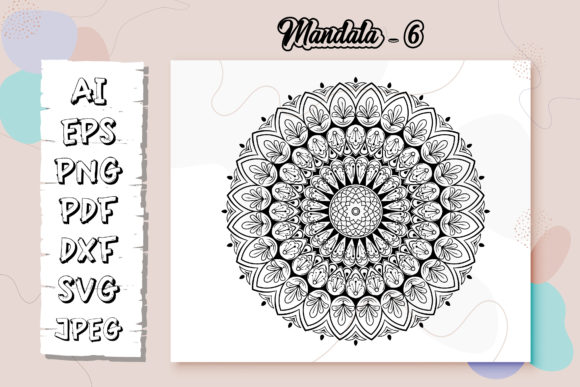
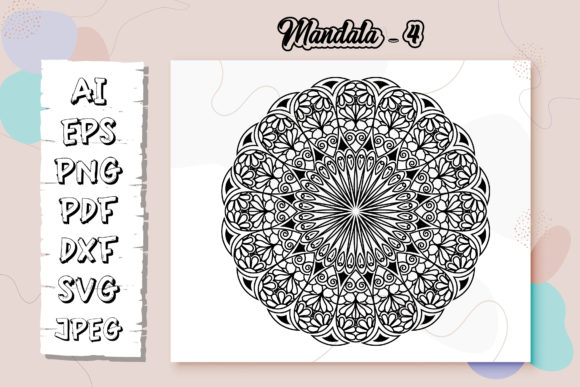
When I opened Mandala Coloring Book Page for Kdp - 7, my eye went straight to the symmetry — clean, balanced, and intentionally unhurried. It’s not overly ornate, but it’s not sparse either. The concentric layers feel meditative, with deliberate negative space between motifs — a quiet nod to breathability in both coloring *and* embroidery. As a designer who regularly converts line art into machine embroidery designs, I immediately saw how this would translate: no frantic detail clusters, no micro-gaps that vanish under satin stitch, no fragile spindles that fray on cotton twill. It’s got presence without pretension — exactly what you want when stitching a custom embroidered tote bag for a yoga studio boutique or a baby onesie for a mindful parenting brand.
Where This Mandala Truly Shines (and Where It Plays It Smart)
Mandala Coloring Book Page for Kdp - 7 works beautifully as a standalone focal point — think center-chest sweatshirt embroidery, pillow cover monogram companion, or tea towel border. Its 8.5 x 11 inch print-ready size gives plenty of breathing room, and the included SVG and EPS files mean easy scaling *without* pixelation when adapting for smaller applications like cap fronts or embroidered patches. I tested a simplified version on a linen apron: the outer ring held crispness, inner petals stayed legible at 3.5 inches wide, and the open-line structure let fill stitch breathe — no puckering, even with lightweight tear-away stabilizer.
It also bridges digital and physical well. As a Graphics asset in the Coloring Pages Amp category, it’s built for versatility: use the PDF for printable mockups, the PNG for social previews, the AI file if you’re refining paths for applique design. That flexibility matters when you’re an Etsy seller juggling client requests — one file set supports your embroidery project, your printable coloring kit, *and* your Instagram story teaser.
Real-World Embroidery Considerations You Can’t Skip
Let’s be direct: this isn’t a “drop-in-and-stitch” design for every fabric or finish. On thin or stretchy fabric — say, a lightweight cotton tee — I’d reduce stitch density slightly and add cutaway stabilizer underneath. The mandala’s continuous outer circle can torque if tension isn’t dialed in, especially near seams or curved surfaces like baseball caps. For baby embroidery or nursery decor, I’d avoid dense fill stitches in the center motif unless using ultra-soft thread; instead, opt for running stitch outlines or low-density tatami fill to keep it gentle against delicate skin.
Dark fabric? Absolutely viable — but test thread colors first. The design’s open linework means contrast is your friend. A charcoal mandala on ivory linen reads serene; the same on navy needs brighter ecru or pale gold thread to stay visible. And while it’s lovely on mugs and bags digitally, remember: true embroidery requires fabric-friendly adaptation. Don’t embroider directly from the PNG — trace the vector paths, simplify intersections, and confirm your hoop size accommodates the widest span comfortably.
What Makes It Feel Handmade — Not Just “Made”
Customers notice authenticity. When you use Mandala Coloring Book Page for Kdp - 7 thoughtfully — pairing it with quality stabilizer, choosing thread colors that harmonize rather than shout, placing it with intention (not just centering by default) — it elevates your finished product from craft to keepsake. A holiday embroidery gift stitched onto a wool-blend blanket feels intentional, grounded, personal. That perception of care builds trust, especially for small shop owners and creative entrepreneurs selling on Etsy or at local fairs. It doesn’t scream “mass-produced”; it whispers “made for this moment.”
Smart Workflow Notes Every Embroidery Designer Should Run Through
- Test on scrap fabric first — especially if using textured weaves like burlap or terry cloth.
- Check thread color contrast on both light and dark backgrounds before finalizing.
- Review stitch density — high-fill areas may need reduced density for breathable fabrics.
- Confirm hoop size compatibility — scale down only if your smallest hoop comfortably contains the design’s widest element.
- Inspect small details at actual stitch size — those tiny petal tips should remain distinct, not merge.
- Test black-and-white mockups to assess value contrast before committing to color.
- Use proper stabilizer — cutaway for knits, tear-away for stable wovens, fusible for lightweight layers.
- Verify licensing before selling finished embroidered items or bundling the digital embroidery file — the listing confirms KDP and general commercial use, but always double-check scope for your specific business model.
Final Thought: A Quiet Workhorse, Not a Flashy Gimmick
Mandala Coloring Book Page for Kdp - 7 won’t dominate a trade show booth with neon flair — and it shouldn’t. It’s the kind of design that earns repeat orders from boutique owners because it integrates seamlessly into their brand voice: calm, considered, handmade. It performs reliably across custom apparel, personalized gifts, and small-batch merchandise — whether you’re stitching a wedding guest towel set or prepping digital design assets for your next Etsy launch. It respects the craft. It respects the customer. And most importantly, it respects your time as a designer who values clarity over clutter.
If you’re evaluating this for your embroidery project, your craft business, or your next line of small shop products — start simple. Stitch it once, on something real, with intention. Let the mandala do what it does best: hold space, invite attention, and leave room for the human hand behind it.