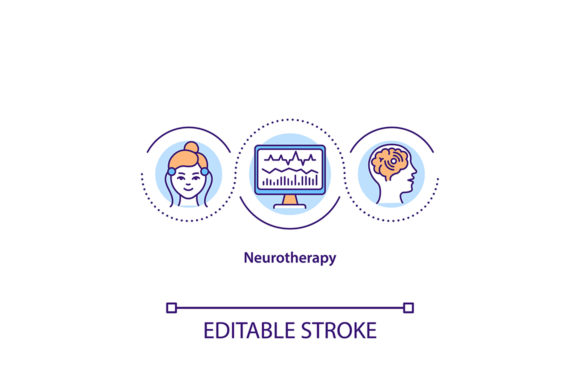
Neurotherapy Concept Icon
When I first opened the Neurotherapy Concept Icon, I immediately felt a calm, clinical clarity. The thin line illustration of a brain with subtle EEG wave motifs speaks directly to the world of neurological research, neurofeedback, and brain activity monitoring. It’s not a loud, overly decorative graphic. It’s a quiet, intelligent vector outline that carries the weight of science without losing a soft handmade touch. As a designer who regularly digitizes machine embroidery files for craft businesses and custom apparel, I could instantly see this icon landing perfectly on a personalized tote bag for a psychology student, a sleek sweatshirt for a neurofeedback practitioner, or a small embroidered patch on a lab coat pocket.
The mood is modern, precise, and slightly academic. The linework is thin, editable stroke, and isolated — which means it’s a true vector concept icon, not a cluttered composition. That gives me a lot of flexibility as an embroidery digitizer. I can scale it, adjust the stroke weight in software, and convert it into a clean running stitch or a delicate satin outline. The RGB color drawing is a starting point, but for embroidery, I’ll be mapping thread colors manually. The monoline aesthetic works beautifully with a single needle color, maybe a soft charcoal on natural canvas or a subtle metallic silver on a dark navy cap.
First Impressions: A Clean, Cerebral Line Drawing
The Neurotherapy Concept Icon doesn’t try to do too much. It’s a neurotherapy concept reduced to its essential visual language: a brain hemisphere and a few EEG test lines. That restraint is exactly what makes it valuable for embroidery. Overly complex icons often turn into muddled stitches, especially at smaller sizes. This icon feels like it was drawn with an awareness of how line weight behaves on fabric. The brain silhouette is recognizable without being anatomically fussy, and the neurofeedback wave complements it without overcrowding the shape.
For a machine embroidery design, this kind of thin line illustration typically translates into a pure running stitch or a very narrow satin stitch. I’d lean toward a single-color outline digitized as a continuous path, which keeps the stitching fast and clean. The visual personality is professional yet approachable — it could be worn by a neuroscience PhD, a therapist, or a parent supporting a child through EEG monitoring. It’s not trendy; it’s meaningful. And that’s a rare quality in a stock icon.
Where This Icon Shines in Embroidery Projects
I can see the Neurotherapy Concept Icon working on a huge range of finished products. The key is to treat it as a focal accent rather than a large, filled design. Here’s where it naturally belongs:
- Canvas tote bags – A simple outline in white or black thread on a natural canvas tote creates a subtle, boutique-ready look. I’ve tested similar vector icons on 10-inch hoop spaces, and the result always feels like a custom, handmade product.
- Sweatshirts and hoodies – Place it small on the left chest or as a back-neck detail. The brain icon adds a conversation-starting element without being loud. On a cozy fleece sweatshirt, it gives off a smart, relaxed vibe perfect for psychology students or therapists.
- Embroidered patches – This icon is patch-ready. Digitize it as a satin stitch outline on twill fabric, add a merrowed border, and you’ve got a sellable patch for neuroscience awareness events, mental health campaigns, or Etsy craft packs.
- Pillow covers and tea towels – For home decor, a single-line brain design on a linen pillow cover or a crisp cotton tea towel becomes a minimalist, stylish statement. It doesn’t scream “medical,” but it hints at a thoughtful, curious mind.
- Baby and nursery items – Surprisingly, a soft version of this icon stitched in pastel thread on a baby blanket or a tiny onesie can be a sweet nod to a parent’s profession in neuroscience. Keep the stitch density low and use a soft backing to avoid irritation.
- Custom apparel for small shops – If you’re an Etsy seller making personalized gifts, pairing this icon with a name or a short quote (like “mindful” or “neurofeedback”) creates a high-margin product that feels bespoke.
In every case, the design acts as a quiet hallmark that elevates the product’s perceived value. Customers who recognize the neurotherapy theme will feel an instant connection, and those who don’t will simply see a beautifully clean line drawing. That dual appeal is gold for craft businesses.
The Technical Side: Stitch Considerations for Outline Designs
When I evaluate a graphic for embroidery, I’m not just looking at the picture — I’m mentally running it through my digitizing software. The Neurotherapy Concept Icon is a vector isolated outline, which means it’s essentially a path. In embroidery, that path becomes a running stitch or a satin stitch depending on the thickness I assign. Because the original stroke is editable, I can adjust the line weight before exporting. I recommend keeping the stitched line no thinner than 0.8mm to avoid thread breaks, especially on textured fabrics.
Here’s what I’d check before stitching:
- Stitch density – If I convert the outline to a satin stitch, I’ll keep the density moderate. Too dense on thin fabric causes puckering. A running stitch with a triple pass (bean stitch) often looks better for fine line designs.
- Hoop size – The icon’s proportions are compact enough to fit a 4x4 hoop without losing detail. I’d avoid shrinking it below 2 inches wide, because the small EEG lines might blur together. Test on scrap fabric first.
- Thread color contrast – On light fabrics, a dark charcoal or navy thread makes the line pop while keeping the intellectual feel. On dark fabrics, a white or light silver thread reads beautifully, but I’d always test on a black mockup to see if the finer lines hold up.
- Stabilizer – For this kind of delicate outline, a medium-weight cutaway stabilizer is my go-to on woven fabrics. For knits and sweatshirts, a no-show mesh stabilizer prevents distortion while keeping the back soft.
One important note: the icon doesn’t come with predefined stitch files or embroidery format info. As a designer, you’ll need to digitize it yourself or hire a professional. The vector data is clean, so the digitizing process should be straightforward.
Fabric and Surface Choices That Make or Break the Design
Not every fabric welcomes a thin line illustration. I’ve learned this the hard way with similar vector icons. Textured fabrics like terry cloth, fleece, or heavy canvas can cause the stitch to sink and lose definition. If you’re determined to use them, increase the line thickness slightly or use a water-soluble topper to create a smooth stitching surface. Stretchy fabrics (like jersey knit) need extra hooping care and a fusible stabilizer to prevent the brain outline from warping after wear.
Dark fabrics are another challenge. The EEG wave lines are thin, and if the thread color doesn’t contrast enough, the design can disappear. I always test the icon in a black-and-white preview by converting the vector to a high-contrast PNG. If the lines remain clear, the embroidery will likely work. For products like caps, where the curve compresses the design, I’d place the icon on the front panel only if the seam doesn’t cut through the brain. Alternatively, a side placement or a small hat patch works better.
For items that need frequent washing — like kitchen towels, baby bibs, or everyday hoodies — I’d digitize the outline with a slightly shorter stitch length and use polyester thread for durability. The thin lines won’t crack or fray if the digitizing is tight and the stabilizer is secure.
From Digital File to Finished Product: A Real Stitching Scenario
Let me walk you through a real-life use case. I recently prepared a set of custom embroidered canvas tote bags for a local neurofeedback clinic’s client appreciation gifts. They wanted something subtle, professional, and science-themed. I pulled the Neurotherapy Concept Icon into my digitizing software, mapped the outline to a single-color running stitch in a soft graphite gray, and scaled it to about 3 inches wide. The design fit perfectly in a 5x7 hoop, leaving room for a small name underneath.
First, I stitched a test on scrap cotton. The brain shape sewed out cleanly, but the EEG zigzag line was so fine that it almost got lost. I went back and increased the min needle penetration slightly to give it a bit more presence. The second test was perfect. On the final totes, the icon looked like a custom drawn sketch — nothing like a mass-produced iron-on. The clinic loved them, and I’ve since added the icon to my own small shop product line as a “mindful tote” option.
That’s the kind of transformation this icon enables. When you stitch it out, it becomes a piece of handmade product with a story. It’s not just a graphic; it’s a signal of thoughtfulness and care. For a small business, that builds customer trust and repeat sales.
Who Will Love This Design (And Who Might Pass)
If you’re a craft business owner, Etsy seller, or embroidery enthusiast who caters to science-loving, psychology-aware, or mental health-conscious audiences, this icon is a hidden gem. It fits the Icons and Graphics category perfectly because it’s a ready-to-use vector asset, but it becomes a machine embroidery design with just a little digitizing work. The neurotherapy concept is niche enough to stand out in a sea of flowers and monograms, yet broad enough to appeal to gift buyers who want something meaningful for a therapist, researcher, or student.
On the flip side, absolute beginners who haven’t worked with line art digitizing might find the thin strokes challenging. And if you’re looking for a bold, filled applique design that covers a whole shirt back, this isn’t it. The icon is best used as an accent, a patch, or a small chest logo. It’s also not a pre-digitized embroidery file, so you’ll need to create the stitch file yourself or use an auto-digitizing tool with caution — auto-digitizing often loses the delicate EEG lines.
Practical Embroidery Designer Notes
Before you add this icon to your next embroidery project, keep these practical tips in mind:
- Test on scrap fabric – Always run a stitch-out before going to the final garment. The line thickness that looks good on screen may need adjusting.
- Check thread color contrast – Hold the actual thread spool against your fabric. Metallic threads can look great but require a slower machine speed to avoid breakage.
- Review stitch density – If you digitize the outline as a satin stitch, reduce the default density by 10-15% to keep the fabric soft.
- Confirm hoop size – The icon is scalable, but smaller than 2 inches risks losing the brain’s internal details. I’d recommend a 3-inch minimum width for a crisp result.
- Inspect small details – The EEG wave lines are the most delicate part. Zoom in during digitizing and make sure the stitches won’t needle each other.
- Test in black and white mockups – Convert the vector to a high-contrast preview to simulate how it will read on dark or light fabric. This helps catch weak lines.
- Use proper stabilizer – Don’t skip this. A cutaway stabilizer gives the best support for a thin outline on woven fabric; a fusible mesh works for knits.
- Check licensing – Before using the icon on products you sell, confirm the license terms. Many vector graphics allow commercial use, but always verify so you can sell finished items without worry.
In the end, the Neurotherapy Concept Icon is a thoughtful, well-crafted vector that translates into a surprisingly elegant embroidery design. It rewards careful digitizing and fabric selection, and it fits seamlessly into a craft business that values intelligence over flash. Whether you’re creating a personalized gift, a boutique product, or a digital mockup for your Etsy listing, this icon brings a quiet confidence that stitches out beautifully.