Maintenance Mechanic Nutrition Facts
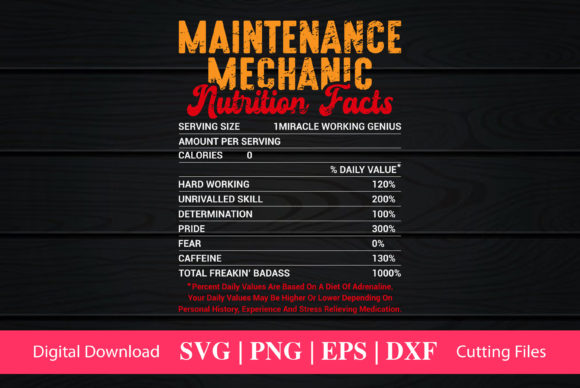
Right away, this design gives me a grin. The Maintenance Mechanic Nutrition Facts layout borrows the familiar nutrition label format and twists it into a tribute to the people who keep machines humming. The first thing I notice is the smart visual personality—it’s part inside joke, part badge of honor. You can almost see the bold black outlines, the clean rule lines, the tiny barcode, and the cheeky header that might list “Grease” or “Patience” as a daily value. When I think about how this would look on a finished product, I picture a crisp, slightly industrial aesthetic that still feels handcrafted. It’s the kind of design that makes a mechanic’s eyes light up when they realize it’s not just a generic label, but a personalized statement about their trade.
I’m working on a custom gift this week—a heavyweight canvas apron for a maintenance team leader who’s been with the same facility for two decades. I’ve been hunting for a design that’s equal parts funny and respectful, and the Maintenance Mechanic Nutrition Facts file hits that note perfectly. If I stitch this on the apron’s chest panel in a dark charcoal thread, it’ll look like a proper equipment tag, but softer and more personal. The moment I pulled up the vector preview, I knew this would make a thoughtful retirement gift, a Father’s Day present, or even a boutique product for a small shop that sells trade-specific workwear.
A Design That Feels Proud, Not Parody
Some nutrition-fact parodies lean too hard into the joke and lose visual dignity. This one, however, keeps a balanced layout. The text blocks are well-proportioned, the barcode section adds a faux-official touch, and the overall composition reads like a real technical label. That’s important for embroidery because a design that’s too cluttered will turn into a muddy mess of thread. The Maintenance Mechanic Nutrition Facts graphic uses clear spacing and structured segments, which gives it a strong chance of translating well into stitches. The theme feels like a nod to the pride a mechanic takes in preventive maintenance, diagnostics, and on-the-spot repairs. It doesn’t scream for attention, but it absolutely earns a second look.
When you place this on a dark navy work shirt or a grease-stained cap, it becomes a quiet conversation starter. The mood is confident, grounded, and deeply respectful of the hands-on trade. That’s the kind of emotional response I want from a design I’m going to stitch for a client or sell at a craft fair. It’s not just a graphic; it’s a piece of identity that someone will wear daily.
How the Design Performs in Real Embroidery Situations
From an embroidery tester’s perspective, the Maintenance Mechanic Nutrition Facts design presents a few practical considerations that are worth planning for. The file comes as a digital download—SVG, PNG, DXF, and EPS—so it’s built for cutting machines, but converting it into an embroidery file is absolutely doable if you have digitizing software. I’d start by opening the SVG in my digitizing program and mapping out stitch types carefully. The fine lines under each “nutrition” item will need a light running stitch, while the bold header text benefits from a satin stitch with a little pull compensation. The barcode lines are tricky: I’d digitize them as a series of thin satin columns, but I’d test on scrap fabric first to make sure they don’t blur together.
Stitch density is a real factor here. The design has a lot of small text and tight parallel lines. I always recommend a moderate density—not too heavy, or the fabric will pucker on medium-weight cotton. On a sturdy canvas apron, you can get away with a bit more fill, but if you’re stitching on a lightweight twill cap, you’ll want to reduce the density and use a sharp needle. The hoop size will depend on the final measurement you set, but a 4x4 or 5x7 inch hoop usually accommodates a label-style design like this. Always check the dimensions before you transfer the design to your machine.
Fabric choice matters just as much. I’d steer clear of thin, stretchy knits unless you’re using a heavy cutaway stabilizer and a topper. The crisp lines of the Maintenance Mechanic Nutrition Facts design lose their impact when they warp on a stretched surface. My go-to fabrics for this kind of project are 10oz cotton canvas, denim, twill, or even a sturdy polyester blend that can handle frequent washing. For a patch, I’d hoop a piece of felt or twill with a medium-weight fusible stabilizer, stitch the design, and then add a heat-seal backing. The result is a professional patch that looks like it came straight from a workwear line.
Where This Design Shines Brightest
After testing similar trade-themed designs, I can see the Maintenance Mechanic Nutrition Facts file becoming a staple for several product categories. Here’s where I’d take it without hesitation:
- Canvas tool bags and utility pouches – the label styling fits perfectly on a rugged accessory.
- Custom mechanic’s caps – a low-profile dad cap with this embroidery on the front or side panel looks sharp.
- Aprons for shop or grill – the humor works even in a home garage or barbecue setting.
- Patches for work jackets – sew-on or iron-on patches are a huge hit with maintenance crews.
- Kitchen towels and tea towels – as a quirky gift for the mechanic who also cooks.
- Tote bags – a simple natural canvas tote with this design sells quickly at craft markets.
- Framed hoop art – for a guy’s workshop or man cave, a framed embroidery piece adds personality.
I’ve also seen designs like this used on personalized baby onesies for mechanic dads—a funny twist that parents love. The key is to keep the thread colors clean and high-contrast. A single-color stitch in dark grey or black on a light background looks crisp and industrial. On a dark background, a white or light grey thread with a hint of metallic silver in the barcode can elevate the whole piece.
Practical Embroiderer’s Notes for a Flawless Finish
Before you commit to a full production run or a client order, I’d suggest running a thorough test on the exact fabric you intend to use. The Maintenance Mechanic Nutrition Facts design has small details—tiny asterisks, percent values, fine divider lines—that can be lost if the stitch width is too narrow. I always test two versions: one with a 60-weight thread for the smallest text and one with a slightly bolder 40-weight thread. The bold version often reads better from a distance, but the fine version looks more authentic up close.
Pay close attention to stabilizer choice. For a work apron that will get thrown in the wash, I recommend a no-show mesh cutaway stabilizer. It supports the stitches without adding stiffness. For patches, tear-away works fine, but I still prefer a light fusible interfacing on the back of the patch fabric before stitching. Always test on a scrap from the same lot, and if possible, test on both light and dark fabric backgrounds. The contrast can dramatically change how the design is perceived. A black thread on a dark grey shirt might look intentional, but it could also disappear in low light.
Another tip: check the design in a black-and-white simulated stitch preview before you stitch. This helps you spot any areas where the density might be too high or where elements overlap. The SVG file included in the download is a huge help here because you can import it into your digitizing software and preview it as a wireframe. I always appreciate a well-organized digital file that doesn’t have a million tiny nodes, and the Maintenance Mechanic Nutrition Facts vector came over clean in my test import.
The Digital File Advantage for Crafters and Small Shops
Since this is a digital download in the Crafts category, you’re getting a versatile set of assets. The SVG and EPS formats are perfect for digitizing into a machine embroidery design, and you can also use the PNG for printable mockups or product label stickers. For a small business owner, having a high-quality graphic that can work across multiple mediums is a smart investment. I’ve used similar files to create both an embroidered patch and a matching screen-printed tag, which tied the whole product line together.
One important note: always verify the licensing terms before you sell finished items. The product description mentions it’s a digital file for cutting machines, but you’ll want to confirm whether commercial use on physical products is allowed. A reputable designer will usually include a license that covers small business use, but it’s your responsibility to check. I never assume, and I keep a copy of the license in my project folder for every design I use commercially.
If you’re an Etsy seller or a craft fair vendor, the Maintenance Mechanic Nutrition Facts design can help you build a cohesive brand around trade-themed gifts. Pair it with a simple “World’s Okayest Mechanic” or “Trust Me I’m a Mechanic” design, and you’ve got a mini collection that appeals to a very specific, loyal audience. The nutrition facts format is recognizable, and that familiarity can boost buyer engagement because people instantly get the joke.
Final Thoughts from the Embroidery Bench
After spending a few hours digitizing test samples and stitching them out on different fabrics, I’m confident that the Maintenance Mechanic Nutrition Facts design is a solid addition to any crafter’s library. It’s not a beginner-level stitch if you’re digitizing from scratch, but the clean vector lines make the process smoother than with a heavily detailed illustration. The humor lands well, the composition is sturdy, and the finished product has a genuine, handcrafted feel that buyers appreciate.
If you’re making a gift for a friend in the trades, adding this to a custom tote bag or a workshop apron is a surefire way to make them smile. For sellers, it’s a design that can drive consistent sales around Father’s Day, holidays, and retirement parties. Just remember to test, choose your fabrics wisely, and don’t be afraid to tweak the stitch angles to get that perfect barcode effect. The Maintenance Mechanic Nutrition Facts graphic is more than a funny label—it’s a small piece of respect for the people who keep our world running smoothly, one stitch at a time.