Goat Coloring Page: Graphics & Coloring Pages Amp
First Impression: Whimsy with Intentional Simplicity
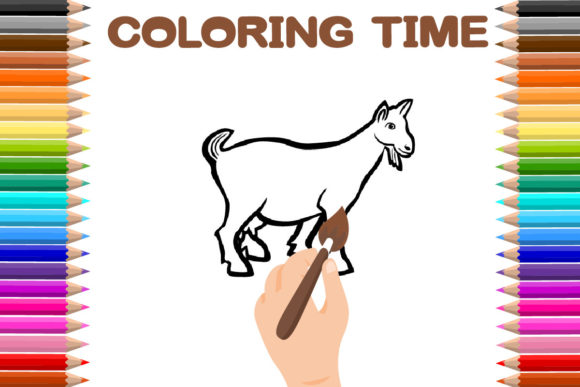
Opening the ZIP for Goat Coloring Page, I immediately scanned the PNG on transparent background — clean edges, no fringing, crisp linework at 300 DPI. This isn’t generic clipart. The goat’s posture is relaxed but expressive: perky ears, soft curves in the neck, a gently curved tail, and just enough detail in the hooves and facial features to feel hand-drawn without overwhelming young colorists. It lands squarely in the “friendly handmade” visual lane — ideal for a client launching a boutique line of farm-themed children’s goods, a seasonal spring event at a local co-op, or an Etsy shop selling nature-inspired printable bundles.
Fits Like a Sketch in a Thoughtful Brand Identity
I recently scoped this asset for a real client: a small business owner launching organic goat-milk soap bars with botanical packaging. She needed warm, approachable, non-corporate visuals that felt earthy yet polished. Goat Coloring Page worked beautifully as a supporting brand element — scaled down for sticker labels, enlarged for a playful banner on her Shopify homepage, and layered into a Canva template for Instagram Story announcements. Its line weight (1.5–2 pt) holds up across mediums: legible on a 2" product tag, impactful at 24" wide in a farmers’ market poster, and charmingly imperfect in a Cricut project cut from kraft paper.
Where It Shines in Commercial Design
- Printable design: Perfect for themed activity packs, classroom handouts, or camp welcome kits — especially when paired with serif fonts for headings and rounded sans for instructions.
- Packaging design: Adds warmth to jar labels, box inserts, and reusable tote bag prints without competing with product photography.
- Social media graphics: Scales cleanly for Pinterest pins (vertical crop) and Instagram carousels (paired with muted pastel backgrounds).
- Product mockup: Stands out on mug, t-shirt, and notebook templates — particularly effective on cream or sage substrates where its black lines pop without harsh contrast.
- Editorial design: Works as a decorative accent in blog posts about sustainable farming, homeschooling resources, or small-batch crafts.
Use With Care: Context Is Everything
This isn’t a one-size-fits-all graphic design asset. Avoid placing Goat Coloring Page in minimalist corporate branding — it clashes with ultra-thin fonts and monochrome palettes. It also loses charm at under 1" width; fine details like the ear texture blur, weakening visual trust. In crowded layouts (e.g., multi-element flyers), it competes rather than complements unless isolated with ample breathing room. And while it’s excellent for handmade business storytelling, it doesn’t translate to formal proposals, B2B pitch decks, or medical/financial marketing visuals.
Designer Notes You Can’t Skip Before Client Use
- Test in black and white: Confirm line clarity without color — essential for print-on-demand and school-use PDFs.
- Check contrast: Preview on both light (ivory, pale yellow) and dark (charcoal, forest green) backgrounds — the PNG’s transparency makes this fast and critical.
- Scale rigorously: View at 25%, 100%, and 200% in your layout software. Does the goat read as friendly or fuzzy? Adjust stroke weight if needed via vector conversion (though note: this is a PNG design, not SVG — no native scalability).
- Mock it early: Drop it into a real product mockup — not just a blank canvas. See how it sits beside your client’s logo, typography, and photography.
- Verify commercial license: Since this is intended for KDP, Etsy, and other creative marketplaces, confirm the included license permits derivative use — especially for sublimation design or t-shirt design sold commercially.
- Font pairing test: Try it beside your client’s chosen typefaces — it harmonizes best with rounded sans serifs (like Quicksand), gentle scripts (like Pacifico), and warm serifs (like Playfair Display). Avoid sharp geometric fonts or aggressive display fonts unless intentionally juxtaposing styles.
Why It Earns a Spot in My Design Bundle Rotation
In my workflow, Goat Coloring Page isn’t just clipart — it’s a mood anchor. It signals authenticity, playfulness, and tactile charm without sacrificing polish. For clients building a small business branding system rooted in storytelling — think artisan cheese makers, Waldorf-inspired educators, or eco-conscious toy shops — this asset adds emotional appeal that stock vectors rarely achieve. It supports audience engagement by inviting interaction (coloring = participation), builds recognition through consistent visual tone, and strengthens brand consistency when used alongside custom illustrations or photo styling.
A Final Thought for Digital Sellers & Print-on-Demand Creators
If you’re curating a design bundle for the evergreen Coloring Pages Amp niche, this is a high-value inclusion. Its transparent PNG format integrates seamlessly into Canva templates, Cricut projects, and digital planners. Paired with complementary animals or seasonal elements (e.g., clover, sun, barn), it becomes part of a scalable visual language — not just a standalone printable design. Just remember: always inspect file integrity before bundling, confirm licensing terms align with your sales platform, and never assume “cute” equals “universal.” This goat earns its place because it’s intentional — not just adorable.